

A Clearer Look at ACA Health Insurance Plans
ACA Marketplace plans remain one of the most important ways individuals and families can access comprehensive major medical coverage. They are built around broad consumer protections, essential health benefit rules, and plan comparisons that help people evaluate more than just a monthly premium. [1] [2]
For a site focused on major medical insurance, ACA plans deserve a clearer and more current explanation because they are designed as comprehensive coverage rather than narrow or supplemental-only products. If you want the broader foundation first, start with major medical health insurance. [2]
Pre-Existing Conditions
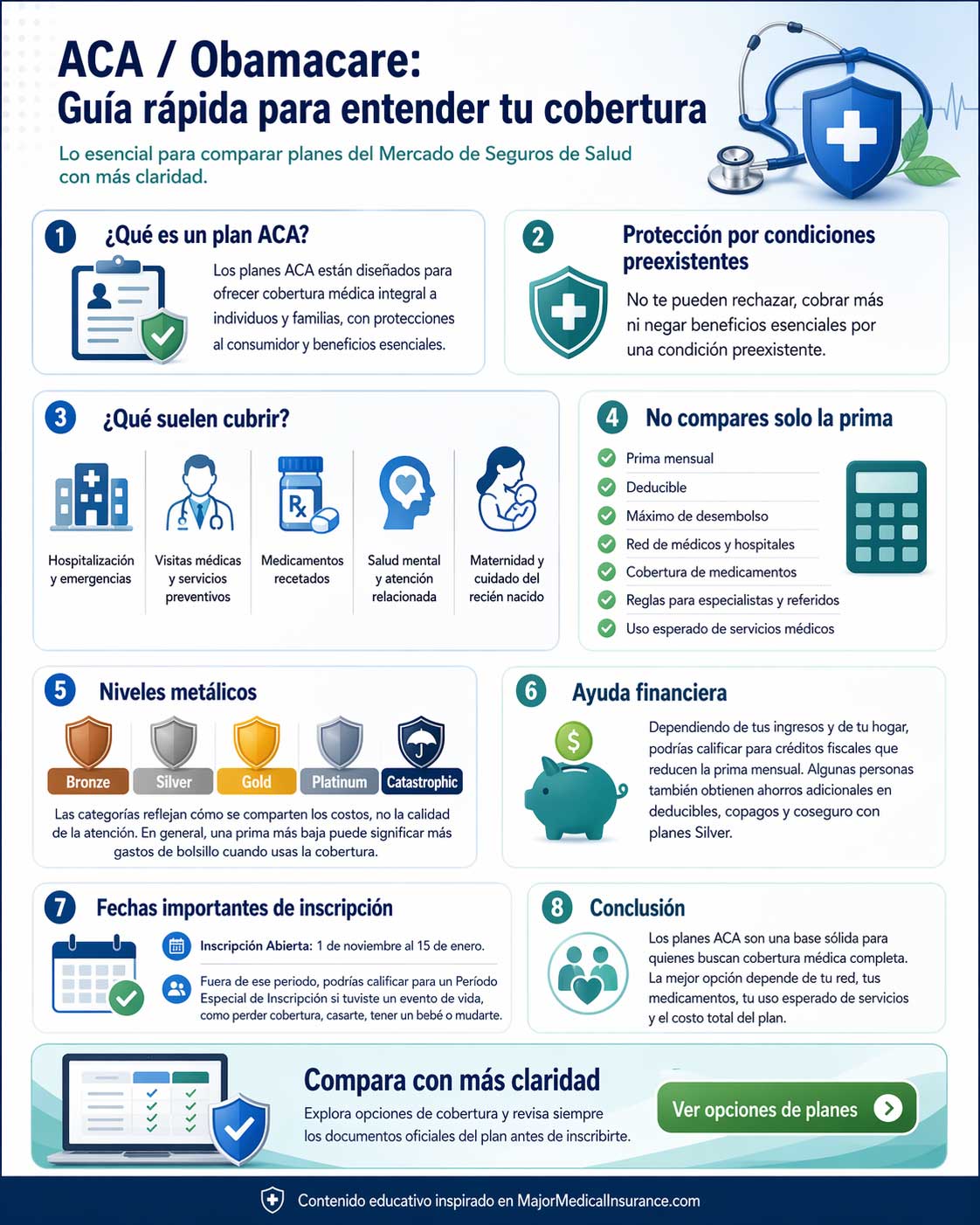
Marketplace plans cannot reject applicants, charge more, or refuse to cover essential health benefits because of pre-existing conditions. For a more detailed breakdown, see pre-existing conditions and major medical insurance. [1]
Essential Benefits
Marketplace plans cover the ACA’s essential health benefit categories, which form the backbone of comprehensive coverage. [2]
Enrollment Rules
Open Enrollment remains the standard path for many shoppers, while Special Enrollment Periods may apply after qualifying life events. [5]
What ACA Plans Are Meant to Do
ACA Marketplace coverage was built to improve access to health insurance and create stronger consumer protections in the individual market. That matters because major medical insurance is supposed to help with a broad range of medically necessary services, not just isolated events or narrow categories of care. [1] [2]
In practice, ACA plans are important because they combine standardized protections with plan-level differences that still require careful comparison. Two plans may both be ACA-compliant, but deductibles, networks, formularies, referrals, and out-of-pocket limits can still vary in ways that change the plan’s actual value for a household. [3]
What Marketplace Plans Cover
All Marketplace plans must cover the ACA’s essential health benefit framework, but cost-sharing and network design still vary by plan. If you want a broader breakdown of those benefit areas, review what major medical insurance covers. [2]
| Category | Why It Matters |
|---|---|
| Hospital and emergency care | Core major medical protection matters most when high-cost care is needed. |
| Doctor visits and preventive services | These affect routine access to care and long-term health management. |
| Prescription drug coverage | Formularies and pharmacy rules can strongly change a plan’s usefulness. |
| Mental health and related services | Broader benefit structure helps distinguish ACA plans from narrower coverage products. |
| Maternity and newborn care | Comprehensive benefits matter when life stage or family needs change. |
These examples reflect the ACA’s essential health benefit structure for Marketplace plans. [2]
How to Compare ACA Plans More Responsibly
A common mistake is focusing only on the monthly premium. In reality, ACA plan comparisons work better when you also evaluate the deductible, out-of-pocket maximum, provider network, prescription coverage, and how the plan handles specialists or hospital access. HealthCare.gov explains that plan categories are based on how you and the plan share costs, not on the quality of care itself. [3]
That means a lower-premium plan can still become more expensive in practice if you expect regular prescriptions, specialist visits, ongoing treatment, or broader provider choice. A smarter comparison looks at total structure, not just the first number on the quote screen. If you want a deeper plan-by-plan comparison angle, see major medical insurance plans. [3]
Checklist Before Choosing a Plan
- Monthly premium
- Deductible amount
- Out-of-pocket maximum
- Doctor and hospital network access
- Prescription drug coverage
- Referral and specialist rules
- Expected healthcare usage
- Official enrollment timing
Metal Tiers Matter
Bronze, Silver, Gold, Platinum, and Catastrophic categories are based on cost-sharing structure. In general, lower premiums often mean higher out-of-pocket costs when care is used. [3]
Financial Help May Apply
Depending on income and household details, some people qualify for premium tax credits that lower monthly premiums. Some also qualify for extra savings that reduce deductibles, copayments, and coinsurance, but those extra savings apply only with Silver plans. [4]
Timing Still Controls Access
Open Enrollment on HealthCare.gov runs from November 1 through January 15. Outside that window, many people need a qualifying life event to use a Special Enrollment Period. [5]
Enrollment Timing Matters More Than Many People Think
For many shoppers, Open Enrollment is the main path into ACA Marketplace coverage. HealthCare.gov says coverage can start January 1 if you enroll by December 15, and February 1 if you enroll between December 16 and January 15 and pay the first premium. [5]
If you miss Open Enrollment, you may still qualify for a Special Enrollment Period after certain life events, such as losing coverage, getting married, having a baby, or moving. If enrollment timing is your main question, see major medical insurance enrollment. [5]
Final Takeaway
ACA plans remain one of the strongest starting points for people researching individual or family major medical insurance. They are built around standardized protections and broad benefits, but the right plan still depends on network fit, prescription needs, expected medical usage, and total cost structure. [1] [2] [3]
A good ACA page should help visitors compare responsibly, not just repeat old talking points. That is why this version focuses on what still matters now: comprehensive coverage, pre-existing condition protections, essential health benefits, cost-sharing structure, financial help, and enrollment timing. If you are shopping on your own, major medical insurance for individuals is the best next page to read. [4] [5]
References
- HealthCare.gov, Marketplace health plans cover pre-existing conditions. https://www.healthcare.gov/coverage/pre-existing-conditions/ ↩
- HealthCare.gov, What Marketplace health insurance plans cover. https://www.healthcare.gov/coverage/what-marketplace-plans-cover/ ↩
- HealthCare.gov, Health plan categories: Bronze, Silver, Gold & Platinum and 3 things to know before you pick a health insurance plan. https://www.healthcare.gov/choose-a-plan/plans-categories/ | https://www.healthcare.gov/choose-a-plan/comparing-plans/ ↩
- HealthCare.gov, How to Save Money on Monthly Health Insurance Premiums and Cost-sharing reductions. https://www.healthcare.gov/lower-costs/save-on-monthly-premiums/ | https://www.healthcare.gov/lower-costs/save-on-out-of-pocket-costs/ ↩
- HealthCare.gov, When can you get health insurance? and Special Enrollment Period. https://www.healthcare.gov/quick-guide/dates-and-deadlines/ | https://www.healthcare.gov/coverage-outside-open-enrollment/special-enrollment-period/ ↩